If you’ve spent any time exploring witchcraft, you’ve probably come across the term Book of Shadows. It’s one of the most recognisable tools in modern witchcraft, yet it’s also one of the most misunderstood.
Many beginners wonder whether they need one, what should go inside it, or whether there’s a “right” way to keep one. The good news is that there are no strict rules. A Book of Shadows is a deeply personal record of your practice, growing and changing alongside your own journey.
Whether you’re taking your very first steps into witchcraft or looking for inspiration to refresh an existing journal, this guide explains everything you need to know.
What Is a Book of Shadows?
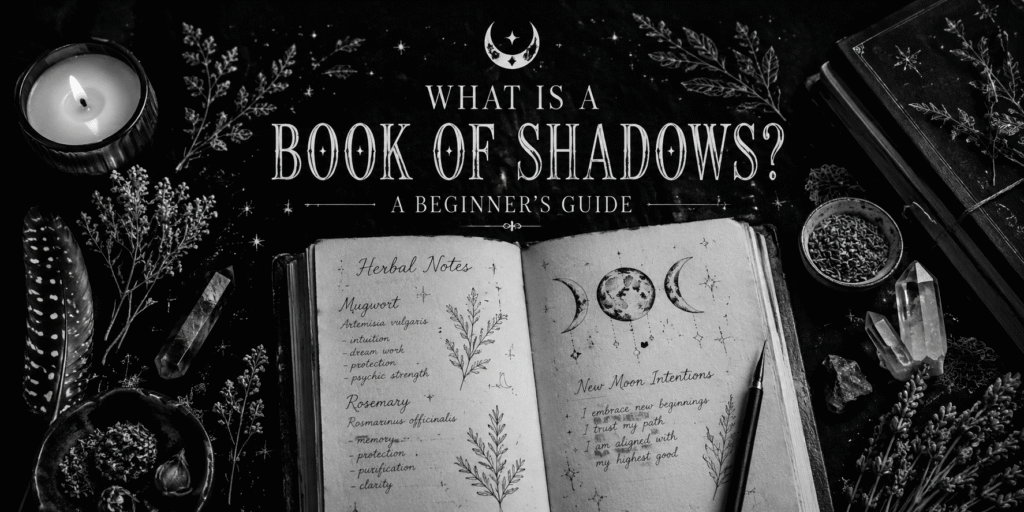
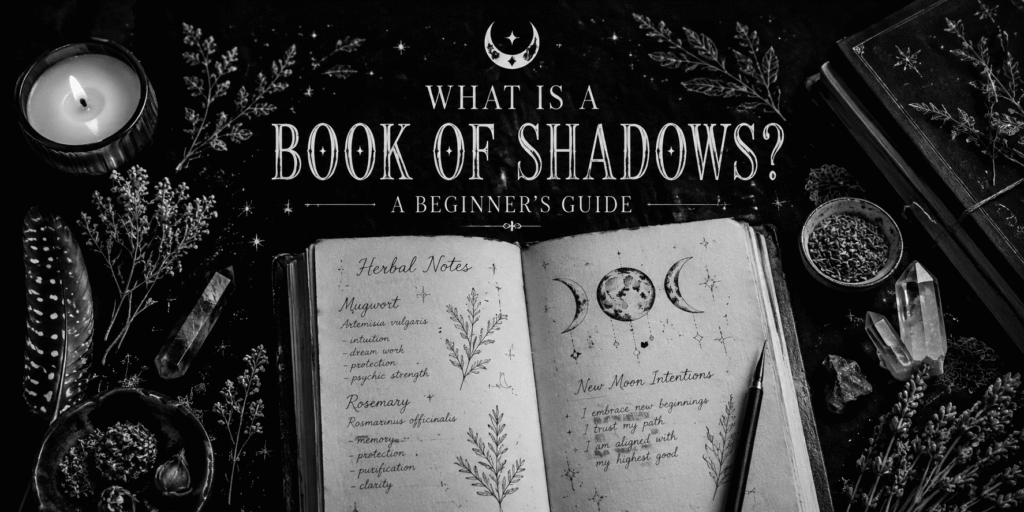
A Book of Shadows is a personal journal used to record your magical and spiritual practice. It can contain anything from moon rituals and herbal notes to tarot spreads, seasonal celebrations, meditations and reflections.
Rather than being a book of spells alone, it often becomes a record of learning, experience and personal growth.
Some people compare it to a diary, while others see it as a reference book that they return to throughout their lives.
There is no single correct format. Some witches fill beautiful leather-bound journals with handwritten pages, while others keep digital notebooks or ring binders that can easily be expanded.
The most important thing is that it works for you.
Where Did the Book of Shadows Come From?
Although magical journals have existed in many cultures for centuries, the term Book of Shadows became widely known through modern Wicca in the mid-20th century.
Early practitioners used the name for collections of rituals, teachings and traditions that were often copied by hand and passed between initiates. Over time, the idea evolved beyond Wicca, and today witches from many different paths create their own personal Books of Shadows.
Modern versions are usually much more individual, reflecting each person’s interests, beliefs and experiences.
Book of Shadows vs Grimoire: What’s the Difference?
This is one of the most frequently asked questions by beginners.
While the terms are sometimes used interchangeably, many practitioners make a distinction between the two.
A Book of Shadows is often thought of as a personal journal. It contains your experiences, reflections, rituals and discoveries as your practice develops.
A grimoire, on the other hand, is generally seen as more of a reference book. It may contain organised information such as correspondences, herbal lore, symbols, historical notes or traditional practices.
In reality, there are no universal rules. Some people combine both into one journal, while others keep separate books for different purposes.
The important thing is choosing a system that supports your own way of learning.
What Can You Put in a Book of Shadows?
One of the joys of creating a Book of Shadows is that it can grow with you. There is no checklist you have to complete, but many people enjoy including:
- Personal intentions and goals
- Moon phase observations
- Wheel of the Year celebrations
- Herbal correspondences
- Crystal notes
- Tarot or oracle card readings
- Spell records
- Meditation reflections
- Dream journal entries
- Symbols and sigils
- Favourite prayers or affirmations
- Seasonal recipes
- Nature observations
- Gratitude pages
- Personal rituals
Over time, your Book of Shadows becomes a unique reflection of your own path.
How to Start Your First Book of Shadows
Beginning can feel overwhelming, especially if you’re worried about making mistakes. Remember that there is no perfect first page.
Many beginners find it helpful to start with:
An introduction
Write a few words about why you’re beginning your journal and what you hope to learn.
Your beliefs
You don’t need to have all the answers. Simply record what resonates with you today, knowing that your understanding may change over time.
The Wheel of the Year
Dedicate a few pages to each sabbat so you can gradually add traditions, recipes, correspondences and reflections as the seasons change.
Moon phases
Keep notes about full moons, new moons and any rituals or observations you make.
Herbs and plants
Build your own herbal reference section, adding one plant at a time as you learn.
Personal experiences
Some of the most valuable pages are the ones that record what you’ve discovered yourself. Over the years, these entries often become the heart of your journal.
Does a Book of Shadows Have to Be Handwritten?
Not at all.
Some people enjoy the ritual of writing by hand, while others prefer digital notebooks, tablets or printable pages stored in a binder.
Choose whichever method you’ll actually use consistently.
A beautifully decorated journal is wonderful, but a simple notebook filled with genuine learning can be just as meaningful.
Should You Decorate Your Book of Shadows?
Decoration is entirely optional.
Some witches love pressed flowers, botanical illustrations, hand-drawn borders and calligraphy. Others keep clean, practical pages that are easy to read and update.
There is no competition for the prettiest journal. Your Book of Shadows is for you.
Common Beginner Mistakes
Many new practitioners worry about getting everything “right”, but your journal doesn’t need to be perfect.
Try not to:
- Wait until you know everything before starting.
- Compare your journal with carefully curated versions on social media.
- Feel pressured to copy someone else’s practice.
- Believe that every page has to be artistic.
- Think you can’t change your mind.
Your Book of Shadows should evolve naturally as your interests and understanding grow.
Frequently Asked Questions
Is a Book of Shadows only for Wiccans?
No. While the term has roots in modern Wicca, many witches, pagans and other spiritual practitioners use a Book of Shadows today.
Do I need expensive supplies?
Not at all. A simple notebook and a pen are enough to begin.
Can I keep more than one?
Absolutely. Some people have separate journals for herbs, dreams, tarot, moon magic or seasonal celebrations.
Is a Book of Shadows secret?
That’s entirely your choice. Some people keep theirs private, while others enjoy sharing parts of their work with friends or their community.
Final Thoughts
A Book of Shadows is far more than a collection of notes. It is a record of your curiosity, creativity and connection with the natural world.
There is no perfect way to create one, no checklist you must complete and no deadline for filling its pages. Start simply, write honestly and allow it to develop alongside your own practice.
Years from now, you may find that your favourite pages aren’t the most beautifully decorated ones, but the entries that remind you where your journey began.