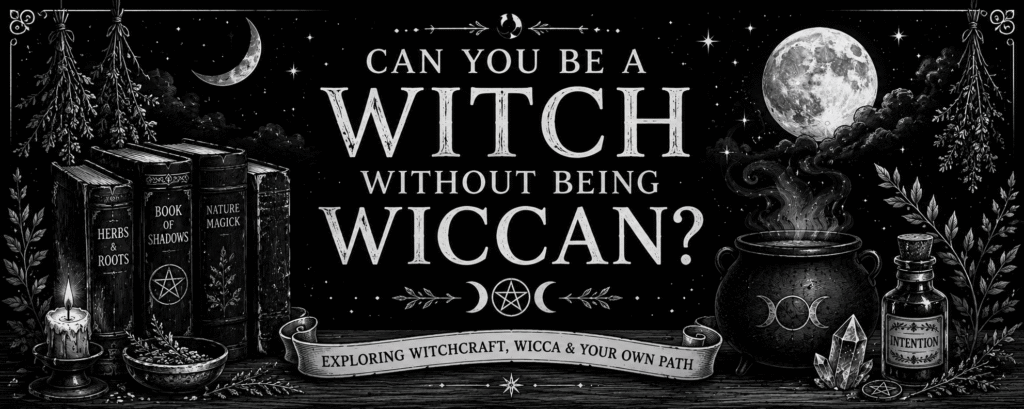
One of the most common questions asked by people beginning their spiritual journey is:
“Can I be a witch without being Wiccan?”
The simple answer is yes.
Although the two are often mentioned together, witchcraft and Wicca are not the same thing. They overlap in many ways, but they are separate concepts, and understanding the difference can help you find the path that feels right for you.
If you’ve ever been curious about witchcraft but wondered whether you had to follow a particular religion or belief system, this guide will explain the differences clearly and help you begin your journey with confidence.
What Is Witchcraft?
At its heart, witchcraft is a practice rather than a religion.
For many people, witchcraft is about:
- Working with intention.
- Connecting with nature.
- Following seasonal cycles.
- Meditation and visualisation.
- Herbal traditions.
- Candle magic.
- Divination.
- Personal spiritual growth.
- Creating meaningful rituals.
How those practices are understood varies enormously from one person to another.
Some witches believe in deities, while others do not.
Some view magic as working with spiritual energy, while others see rituals as symbolic acts that support mindfulness, focus and personal growth.
There is no single universal way to practise witchcraft.
What Is Wicca?
Wicca is a modern Pagan religion that developed in England during the mid-20th century.
While there are different traditions within Wicca, many Wiccans share beliefs such as:
- Reverence for nature.
- Celebrating the Wheel of the Year.
- Honouring the cycles of the Moon.
- Working with a Goddess and God (although beliefs vary).
- Ritual practice.
- Ethical principles such as avoiding unnecessary harm.
Many Wiccans practise witchcraft.
However, not all witches are Wiccan.
Witchcraft vs Wicca: What’s the Difference?
Although they often overlap, the easiest way to understand the difference is this:
Witchcraft is something you do.
Wicca is something many people believe and practise as a religion.
Someone can:
- Be a Wiccan who practises witchcraft.
- Be a Pagan witch.
- Be a traditional witch.
- Be a folk witch.
- Be a hedge witch.
- Be a green witch.
- Be a secular witch.
- Practise magical traditions without following any religion at all.
There are many different paths.
Do You Have to Believe in Gods or Goddesses?
No.
Some witches work closely with deities.
Others never do.
Many practitioners simply connect with:
- Nature.
- The changing seasons.
- The Moon.
- Ancestors.
- Personal intuition.
- Symbolic rituals.
Your beliefs are your own.
There is no requirement to worship a deity in order to explore witchcraft.
Is Witchcraft a Religion?
For many people, no.
For others, yes.
Witchcraft can exist:
- alongside Christianity
- alongside Paganism
- within Wicca
- alongside other spiritual paths
- completely independently
Many modern practitioners describe their craft as a spiritual practice rather than a religion.
Different Types of Witchcraft
As you explore, you’ll discover many traditions, including:
Green Witch
Working closely with herbs, trees, gardens and the natural world.
Hedge Witch
Focused on spirit journeys, folklore and liminal spaces.
Kitchen Witch
Bringing intention into cooking, baking and the home.
Folk Witch
Drawing inspiration from local customs, traditions and regional folklore.
Hearth Witch
Creating magic centred on home, family and everyday life.
Eclectic Witch
Combining practices from several traditions while researching their origins and respecting their cultural context.
Solitary Witch
Many people choose to practise alone rather than as part of a coven.
This is one of the most common ways people begin.
Common Beginner Myths
“I need to join a coven.”
Not at all.
Many witches practise happily on their own.
“I need expensive tools.”
You don’t.
Historically, people used everyday objects found around the home.
“I have to choose one path immediately.”
There is no rush.
Most experienced practitioners spend years learning before deciding which traditions resonate most with them.
“Only Wiccans are real witches.”
False.
Witches come from many backgrounds, beliefs and traditions.
How Can You Begin Practising Witchcraft?
Start simply.
You might:
- Read books from reputable authors.
- Spend time in nature.
- Learn about the Wheel of the Year.
- Begin meditation.
- Keep a Book of Shadows.
- Learn about herbs.
- Practise grounding.
- Try simple candle rituals.
- Explore divination when you feel ready.
There is no finish line.
Witchcraft is often described as a lifelong journey of learning.
Frequently Asked Questions
Can you be a witch without following Wicca?
Yes. Many witches practise independently or follow other Pagan, folk or spiritual traditions.
Is Wicca the same as witchcraft?
No. Wicca is a religion, while witchcraft is generally understood as a practice or craft. Although many Wiccans practise witchcraft, not every witch is Wiccan.
Can atheists practise witchcraft?
Some people who identify as atheist or secular engage in forms of witchcraft as symbolic, psychological or nature-based practices rather than expressions of religious belief.
Do all witches celebrate the Sabbats?
No. While many witches observe some or all of the Wheel of the Year festivals, others follow different traditions or choose not to celebrate them.
Final Thoughts
One of the most freeing discoveries for many beginners is realising that there is no single “right” way to be a witch.
Whether your path leads you towards Green Witchcraft, folk traditions, meditation, herbalism, seasonal celebrations or simply a deeper connection with nature, your practice can evolve at your own pace.
The most important qualities are curiosity, respect, thoughtful learning and authenticity. Witchcraft is a personal journey, and no one else can define what that path should look like for you.