Herbalism is one of the oldest relationships between humanity and the natural world. Long before modern pharmacies, people learned to observe the plants growing around them, discovering which nourished, which soothed, which healed and which should be approached with great caution. Across every continent and culture, generations passed this knowledge from teacher to student, parent to child and healer to community.
Today, herbalism continues to inspire gardeners, foragers, herbalists, cooks and witches alike. While many magical traditions assign symbolic meanings to plants, every herb also has its own rich history, folklore and practical uses that deserve to be understood in their own right.
This journey is designed to help you build a respectful and well-rounded understanding of magical herbalism. Rather than simply memorising long lists of correspondences, you will discover why certain plants became associated with protection, love, healing or prosperity, and how folklore, history and observation have shaped these traditions over centuries.
At Roaming Raven Circle, we believe that knowledge should always come before practice. Throughout these lessons, we will clearly distinguish between historical evidence, traditional folklore, modern magical correspondences and scientific understanding. Where historical records are uncertain or modern beliefs differ from older traditions, we will explain this honestly, allowing you to make informed decisions rather than simply repeating information without context.
Equally important is the subject of safety.
Many herbs commonly used in magical practice also contain active chemical compounds. Some can interact with prescription medicines, others may be unsuitable during pregnancy, while certain plants are toxic if consumed or incorrectly identified. “Natural” does not always mean safe, and responsible herbal practice begins with accurate identification, careful research and an understanding of your own limitations.
This course is not intended to train you as a clinical herbalist or medical practitioner, nor should it replace advice from qualified healthcare professionals. Instead, it provides a solid foundation for those who wish to understand herbs within the context of witchcraft, folklore and traditional practice, while encouraging safe, ethical and environmentally responsible learning.
As your knowledge grows, you will begin to notice plants differently. A walk through a woodland, hedgerow or even your own garden becomes an opportunity to recognise familiar species, appreciate seasonal cycles and observe the natural world with greater awareness. Herbalism encourages us to slow down, to pay attention and to develop a deeper relationship with the land that supports us.
Perhaps most importantly, herbalism teaches patience.
Plants grow in their own time. Seeds cannot be rushed, flowers bloom when conditions are right and every season offers different gifts. In learning from plants, we are often reminded to slow our own pace, becoming more observant, more respectful and more connected with the rhythms of nature.
Whether your interest lies in magical correspondences, herbal teas, incense, oils, salves, folklore, gardening or simply recognising the wild plants around you, this journey will give you the knowledge to begin building a practice that is informed, responsible and deeply rewarding.
Throughout this journey you will explore:
🌿 The history of herbalism and its place within witchcraft.
🌱 Herb identification and safe practice.
📖 Magical correspondences and the folklore behind them.
🫖 Preparing herbal infusions, teas, oils and simple remedies.
🔥 Creating incense blends, smoke blends and ritual herbs.
🧴 Making infused oils, balms and botanical preparations.
🌾 Growing, harvesting and storing herbs responsibly.
🌍 Ethical foraging, sustainability and caring for the natural world.
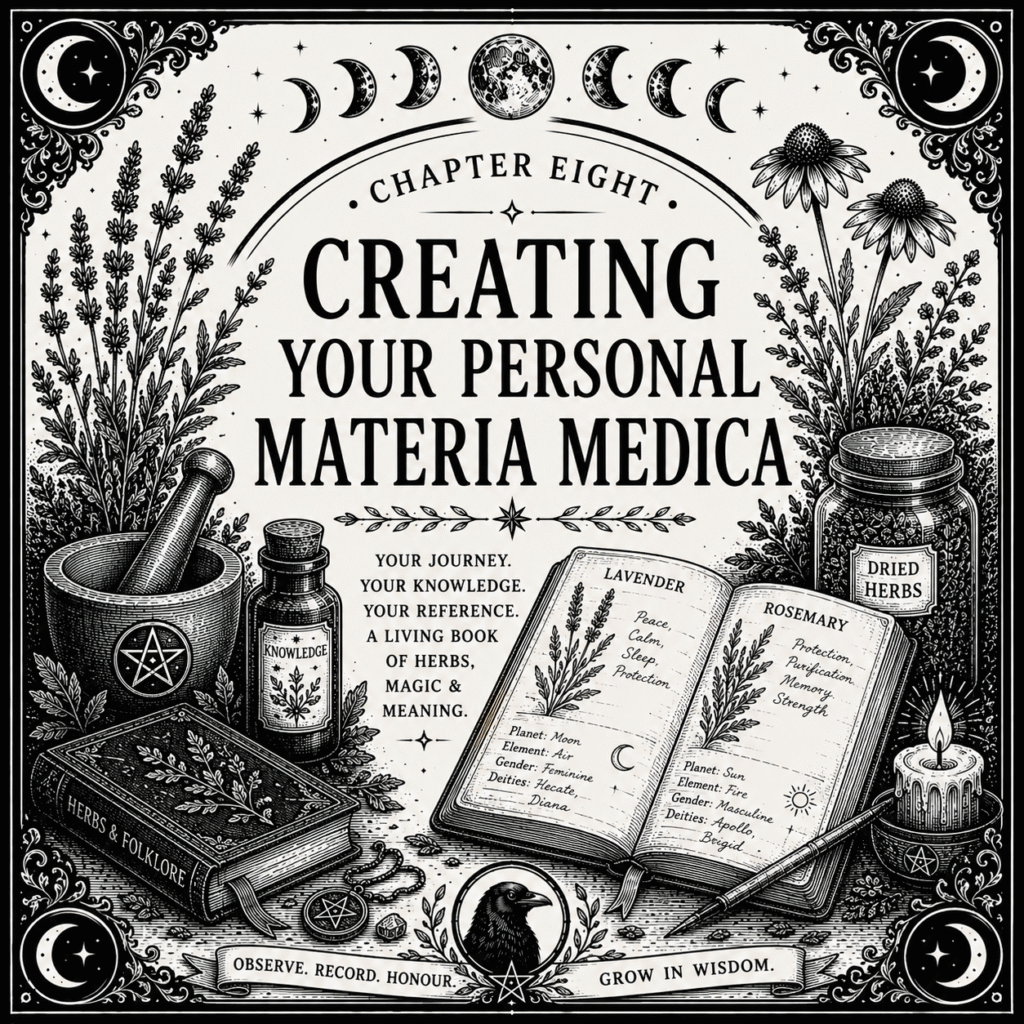
📚 Building your own personal herbal journal and materia medica.
Before You Begin
You do not need a large collection of dried herbs to start this journey.
Many of the most useful magical plants are already growing in gardens, parks and hedgerows—or sitting in your kitchen cupboard.
The goal is not to collect hundreds of herbs.
It is to understand a few of them well.
Take your time. Observe carefully. Ask questions. Research thoroughly.
The best herbalists are not those who know the longest list of plant names, but those who never stop learning from the plants themselves.