Your practice. Your knowledge. Your journey — recorded in your own way.
A Book of Shadows is one of the most personal tools a witch can create.
It might be a beautifully bound handwritten book filled with pressed herbs, sketches and handwritten spells. It might be a practical ring binder with pages that can be moved and replaced. It could live entirely on a laptop or tablet. Or it might be a slightly chaotic collection of notebooks, scraps of paper and pages covered in candle wax.
There is no single correct way to create one.
At its heart, a Book of Shadows is simply a record of your developing magical practice.
It is a place to collect knowledge, document experiences, record rituals and spells, explore correspondences and keep track of what you are learning along the way.
And importantly, it does not need to look like anybody else’s.
What Is a Book of Shadows?
The term Book of Shadows is strongly associated with modern witchcraft, particularly Wicca.
Despite claims sometimes found online, there is no evidence that medieval or early modern witches traditionally kept personal magical books called Books of Shadows.
The term became associated with Wicca during the twentieth century, particularly through Gerald Gardner and the development of Gardnerian Wicca.
Within initiatory Wiccan traditions, a Book of Shadows traditionally contains ritual material, teachings and practices belonging to that tradition.
However, as modern witchcraft developed beyond Wicca, the term began to be used much more broadly.
Today, many witches use Book of Shadows to describe a personal magical journal or reference book containing things such as:
Spells and rituals
Magical correspondences
Herbal knowledge
Crystal information
Divination records
Moon observations
Sabbat celebrations
Deity research
Meditation experiences
Dreams
Sigils
Protection practices
Recipes
Personal reflections
Magical experiments
Your Book of Shadows can therefore become a record not only of what you have learned, but of how your practice develops over time.
More Than a Witchcraft Scrapbook
Pinterest and social media have given us some extraordinarily beautiful Books of Shadows.
There is nothing wrong with making yours beautiful.
Creativity can itself become part of magical practice.
But your Book of Shadows does not need to be an art project.
A page covered in crossings-out because you changed your mind can be more valuable than a perfectly illustrated page copied from somewhere else.
Write in it.
Question things.
Add notes.
Change correspondences.
Record unsuccessful spells.
Write down things you don’t understand yet.
Correct old information when you learn something new.
A working Book of Shadows should be allowed to grow with you.
What Will You Find in This Section?
The Book of Shadows section will help you create and develop a magical record that is genuinely useful to your practice.
We will explore subjects such as:
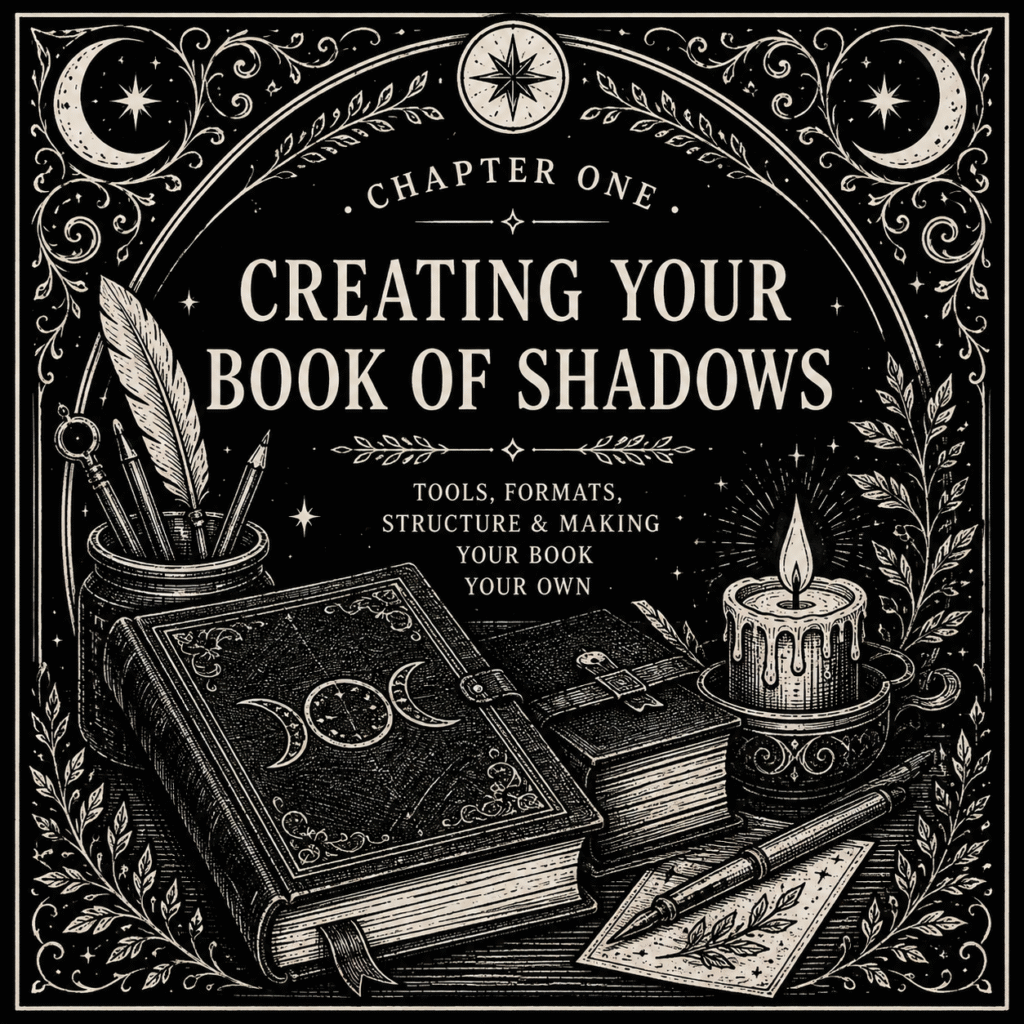
Creating Your Book of Shadows
Choosing between notebooks, binders and digital formats, organising your book and deciding what you actually want it to contain.
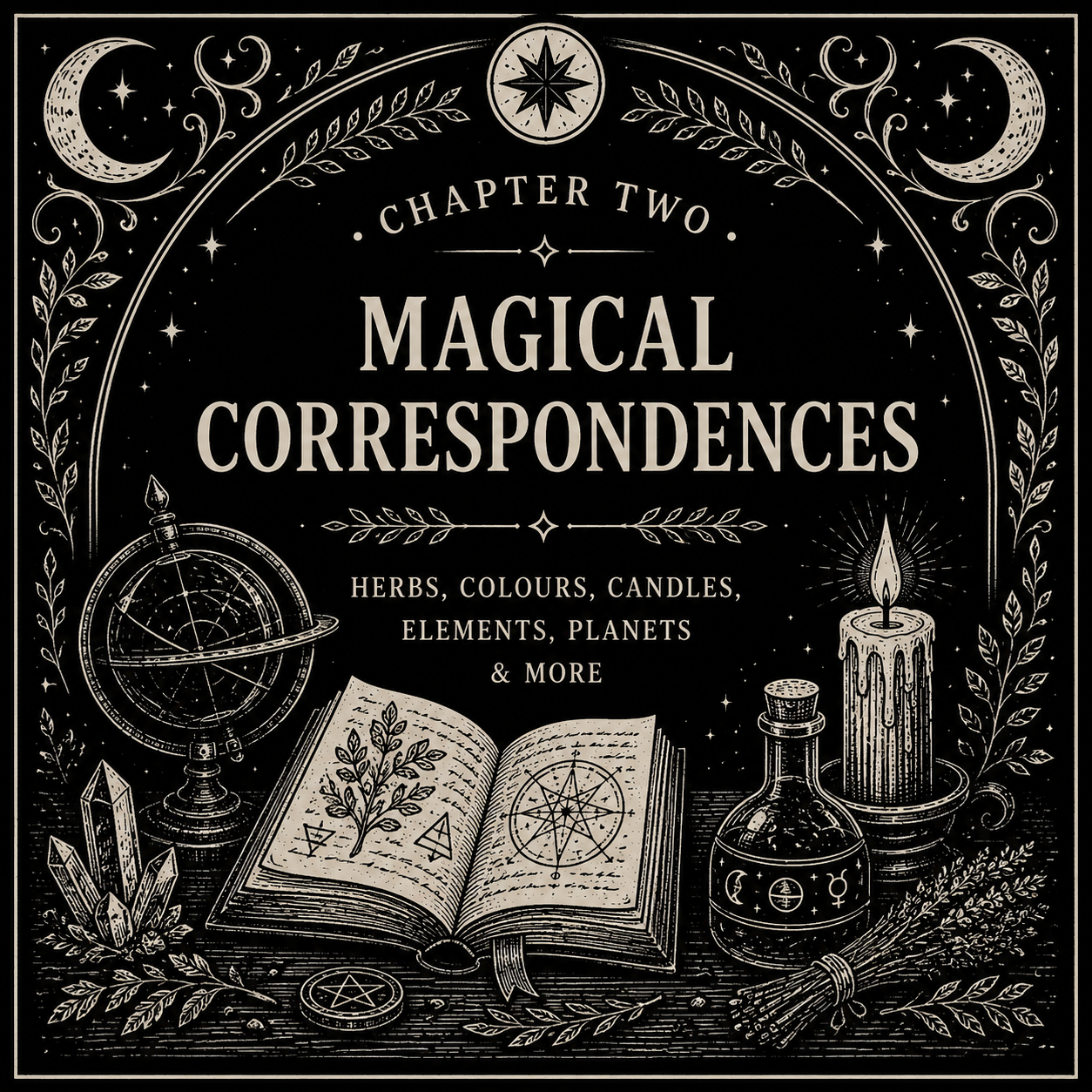
Magical Correspondences
Building useful reference pages for herbs, colours, candles, elements, planets and other magical associations—while understanding that correspondences are not always universal.
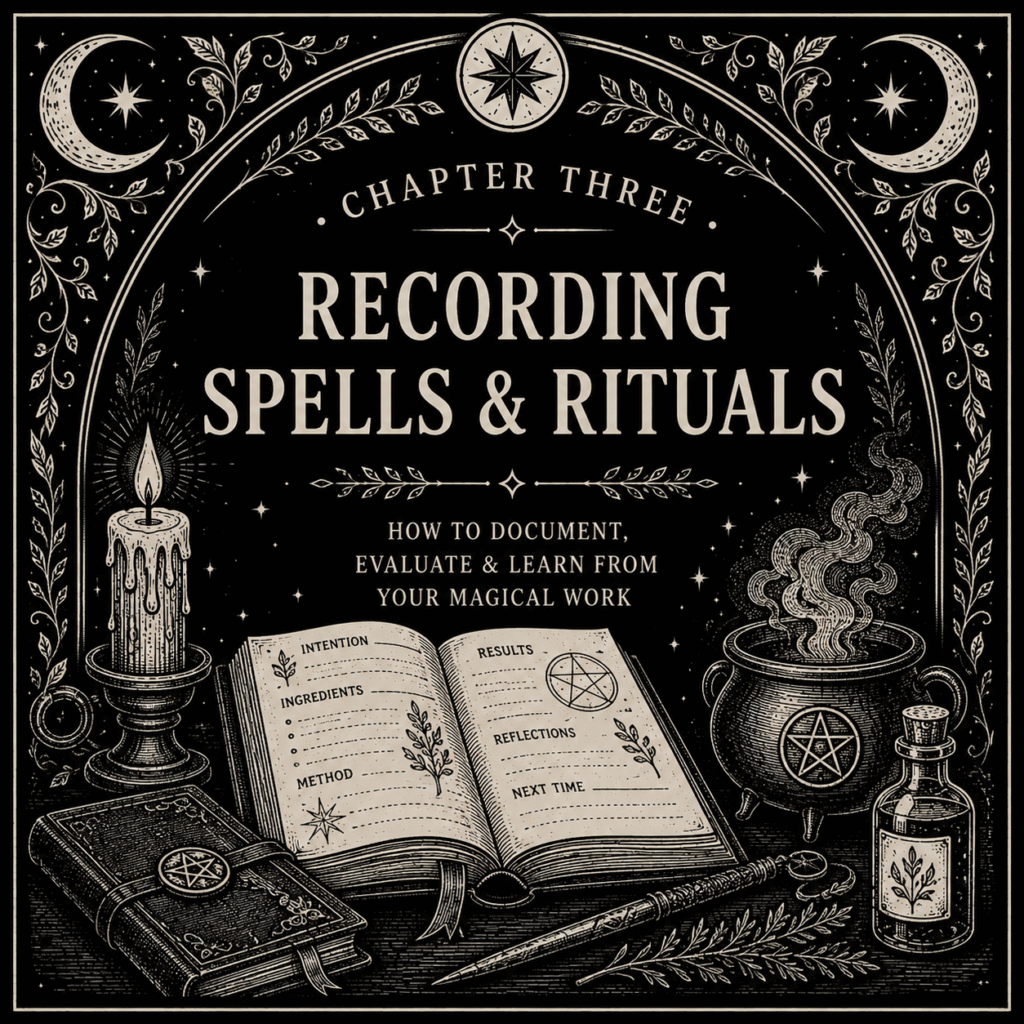
Spells & Ritual Records
Learning how to document your magical work so that you can return to it, repeat it, adapt it and learn from the results.
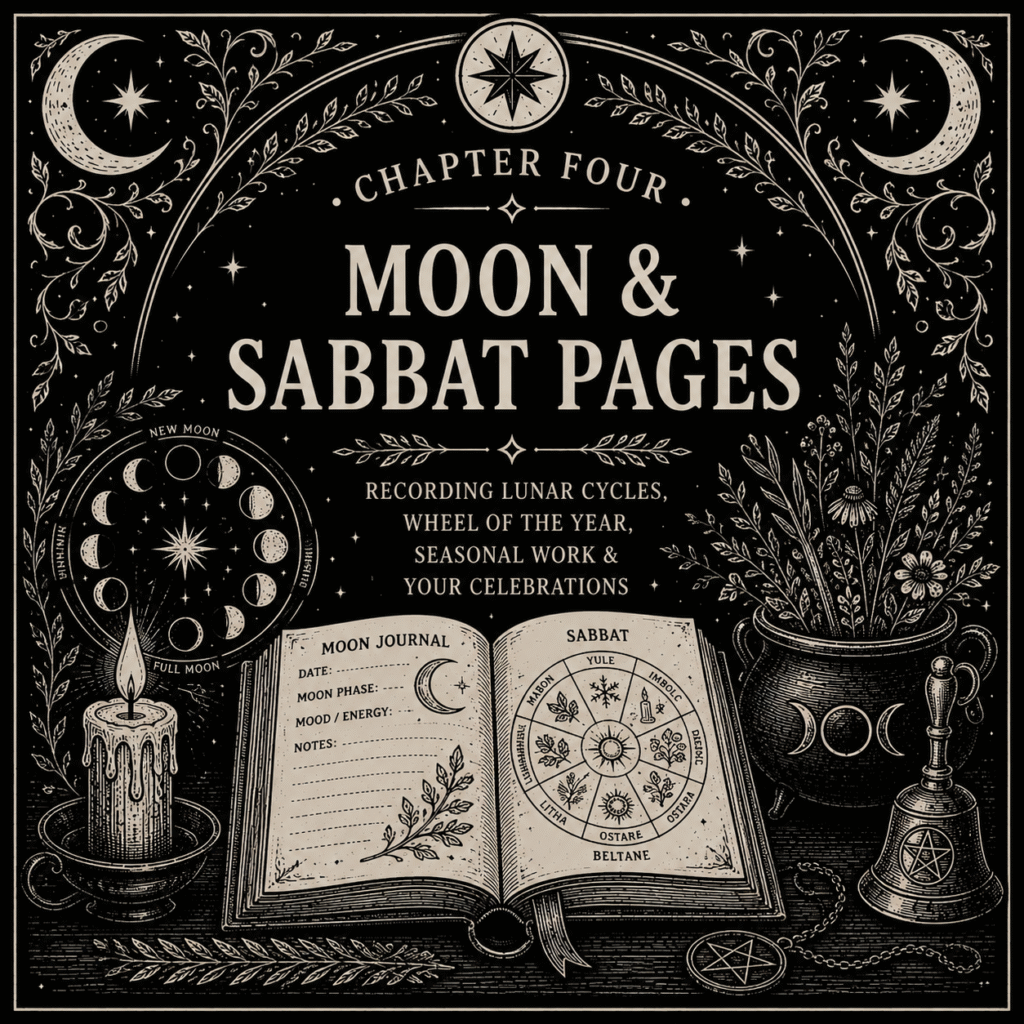
Moon & Sabbat Pages
Creating records of lunar practice, seasonal celebrations and your own relationship with the Wheel of the Year.
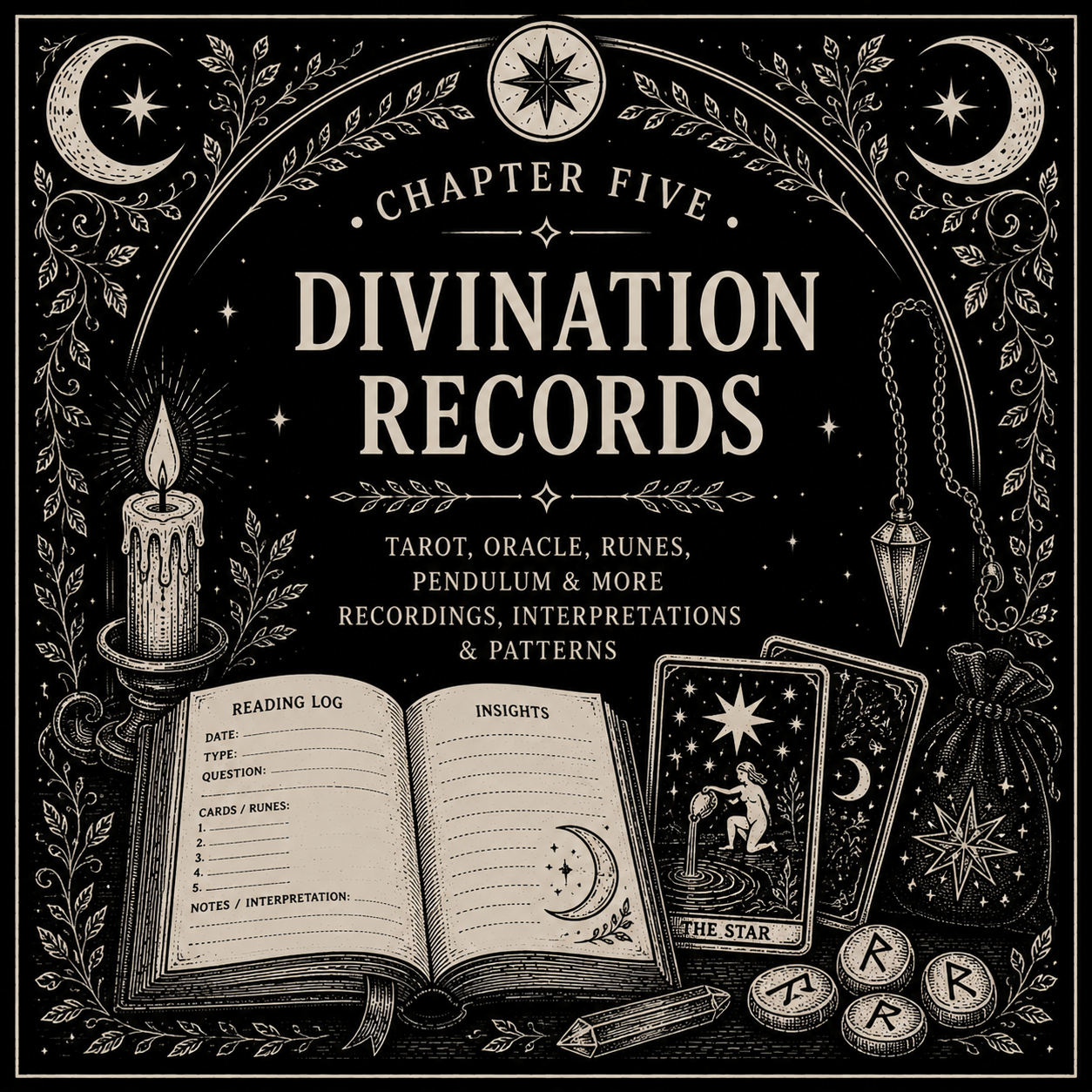
Divination Records
Keeping tarot, oracle, rune, pendulum and other divination readings so that patterns can be recognised over time.
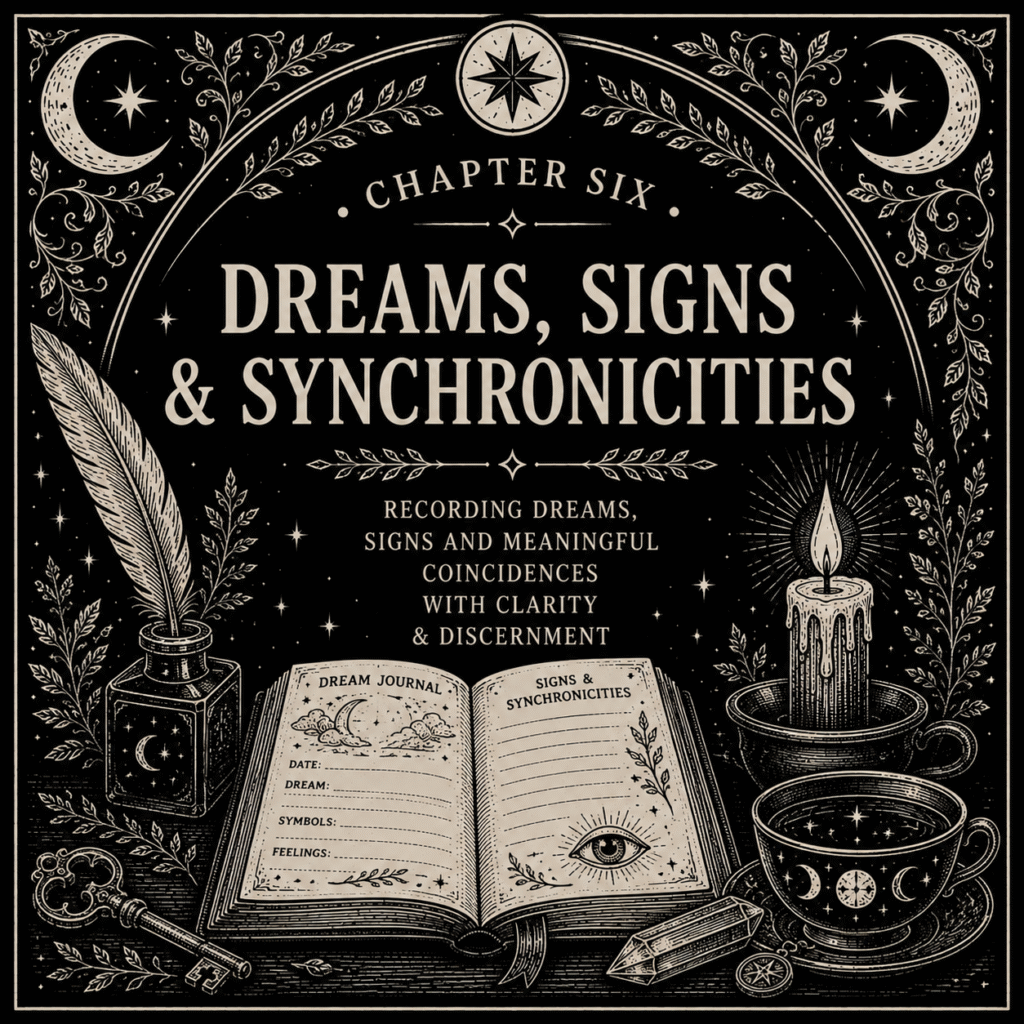
Dreams, Signs & Synchronicities
Recording unusual experiences while learning to distinguish observation from interpretation.
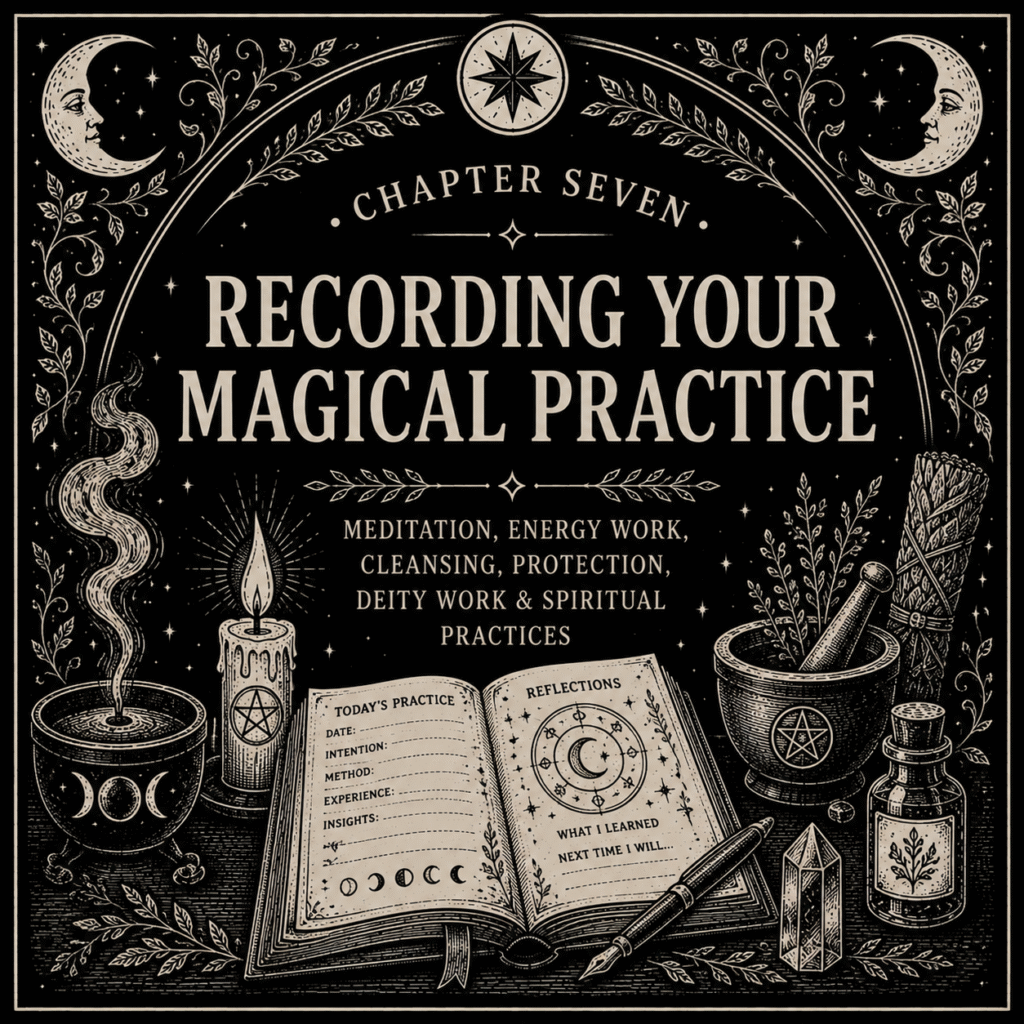
Personal Magical Practice
Documenting meditation, energy work, spirit or deity practice, protection, cleansing and the practices that gradually become part of your own witchcraft.
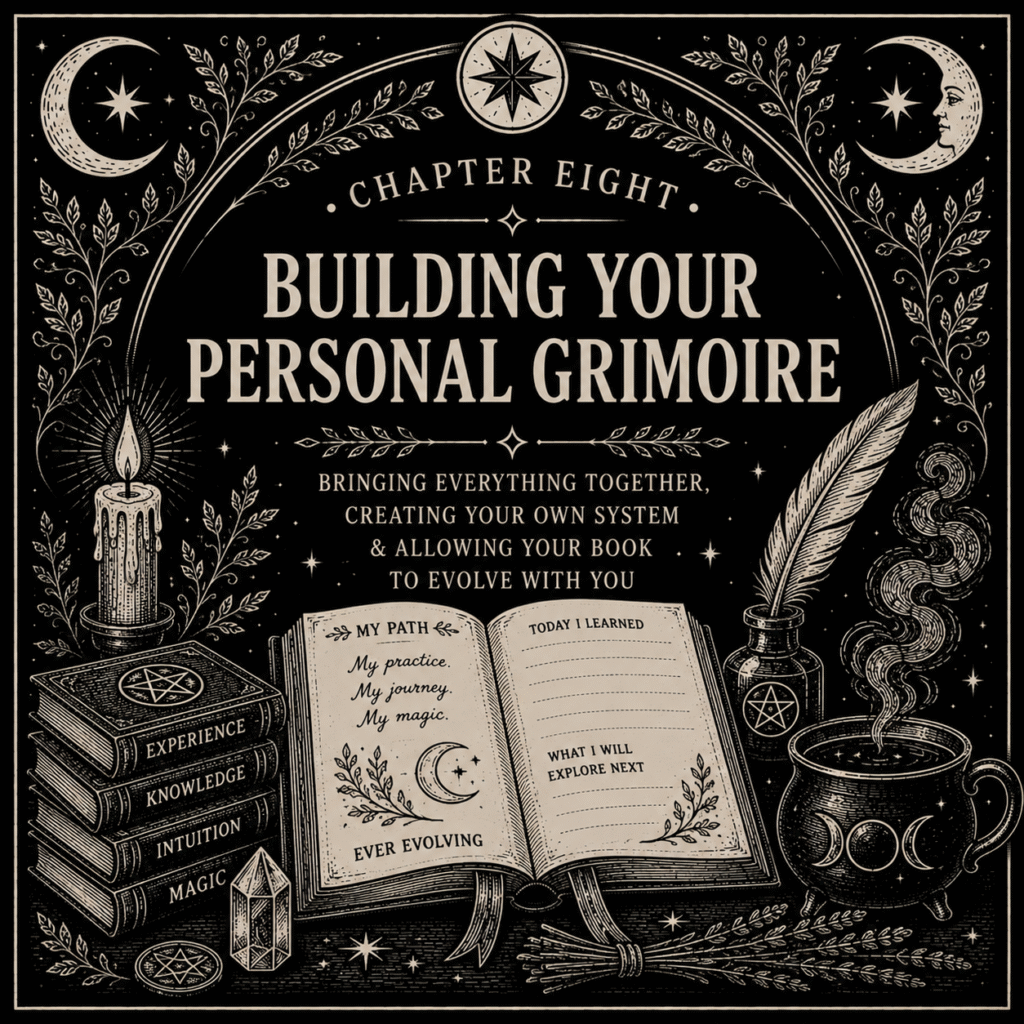
Building Your Personal Grimoire
Bringing everything together and developing a magical reference that becomes increasingly individual to you.
There Are No Required Pages
You may encounter enormous lists online entitled:
“100 Pages Every Witch NEEDS in Their Book of Shadows.”
You do not need them.
You certainly do not need to fill fifty pages with correspondences before you are allowed to perform your first spell.
Start with what is useful.
If you practise tarot regularly, create a tarot section.
If you grow herbs, record them.
If you work closely with the moon, keep lunar observations.
If you never use crystals, you do not require thirty pages about crystals simply because another witch has them.
Your Book of Shadows should reflect your witchcraft rather than an imaginary checklist of what a witch is supposed to know.
Record Where Information Comes From
One habit will dramatically improve your Book of Shadows:
Record your sources.
If you discover a piece of folklore, write down where you found it.
If a correspondence comes from a modern witchcraft book, note the book.
If something comes from historical research, record the source.
If it is your own interpretation, write:
Personal correspondence.
This helps prevent one of the most common problems in modern witchcraft—the gradual transformation of modern ideas into supposedly “ancient traditions.”
Your Book of Shadows can contain history, folklore, modern witchcraft and personal belief.
They simply need to be labelled honestly.
Record What Actually Happened
Your Book of Shadows can also become your magical laboratory.
Rather than simply writing:
Protection Spell
record:
Date:
Intention:
Moon phase:
Ingredients:
Method:
Why I chose these correspondences:
How I felt during the ritual:
Immediate observations:
Outcome:
What I would change next time:
And if nothing happened?
Write that too.
An unsuccessful spell can teach you just as much as one that appears successful.
Over time you may begin noticing patterns.
Perhaps certain ritual structures work particularly well for you.
Perhaps you repeatedly choose the same herbs.
Perhaps your personal associations differ from those in books.
That is how a personal magical practice begins to emerge.
Your Book Can Change
You might begin with a notebook.
Six months later you might wish you had used a binder.
That is fine.
You might create an elaborate correspondence system and later decide you rarely use it.
That is fine too.
You may discover that you prefer:
Handwritten pages
Printable pages
Digital notes
Separate journals
One enormous book
Several specialised books
There is no Book of Shadows police.
The purpose of the book is to support your practice.
You do not exist to serve the book.
Book of Shadows, Grimoire or Magical Journal?
Modern witches often use these terms differently.
Some distinguish them as:
Book of Shadows — personal magical experiences and practice.
Grimoire — organised magical knowledge, instructions and reference material.
Magical journal — day-to-day observations and reflections.
Historically, grimoire generally refers to books or manuscripts containing magical instructions, rituals, charms, spirit conjurations or related occult material.
Book of Shadows, by contrast, is primarily a twentieth-century term associated with Wicca.
You may choose to keep these things separately.
Or you may combine all three.
The terminology matters less than understanding what you are creating.
Privacy
Your Book of Shadows may contain deeply personal information.
Consider carefully what you record and where you keep it.
You might decide that:
Reference pages can be shared.
Spell records remain private.
Personal reflections belong in another journal.
Certain spiritual experiences are recorded only for yourself.
Historically, secrecy has played important roles within various magical and initiatory traditions, but you do not need to make your book secret simply because it is a Book of Shadows.
Privacy is your decision.
Your Book Is Allowed to Be Messy
There may eventually be:
Coffee stains.
Pressed flowers.
Pages you hate.
Spells you no longer practise.
Beliefs you have changed.
Notes written at two o’clock in the morning.
Questions with no answers.
Crossed-out correspondences.
Pages that begin:
“I need to research this properly.”
Keep them.
They are evidence that you are learning.
One day, an early page you now consider embarrassingly basic may show you just how far your practice has developed.
Begin With Curiosity
You do not need to know exactly what kind of witch you are before beginning your Book of Shadows.
You do not need to choose a tradition.
You do not need to have mastered tarot, herbalism, spellcraft or astrology.
Begin where you are.
Record what interests you.
Research carefully.
Experiment responsibly.
Question what you read.
Notice what works for you.
Change your mind when you discover better information.
And allow the book to develop alongside you.
Because ultimately, the most valuable Book of Shadows is not the one with the most beautiful pages.
It is the one that tells the story of your practice.
Welcome to your Book of Shadows.